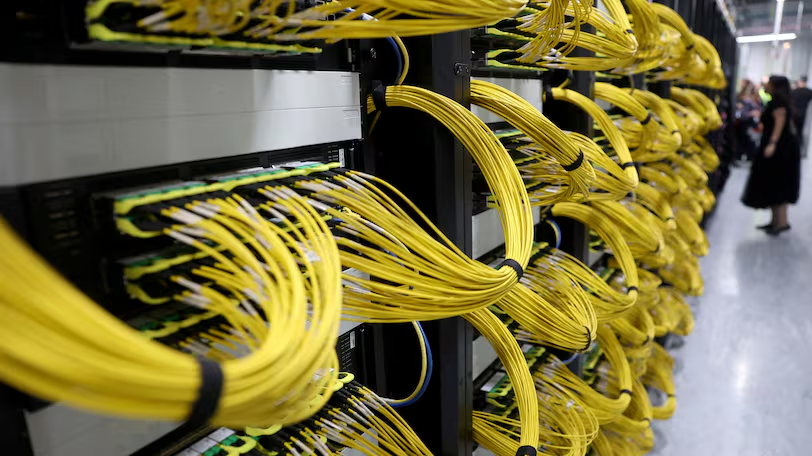


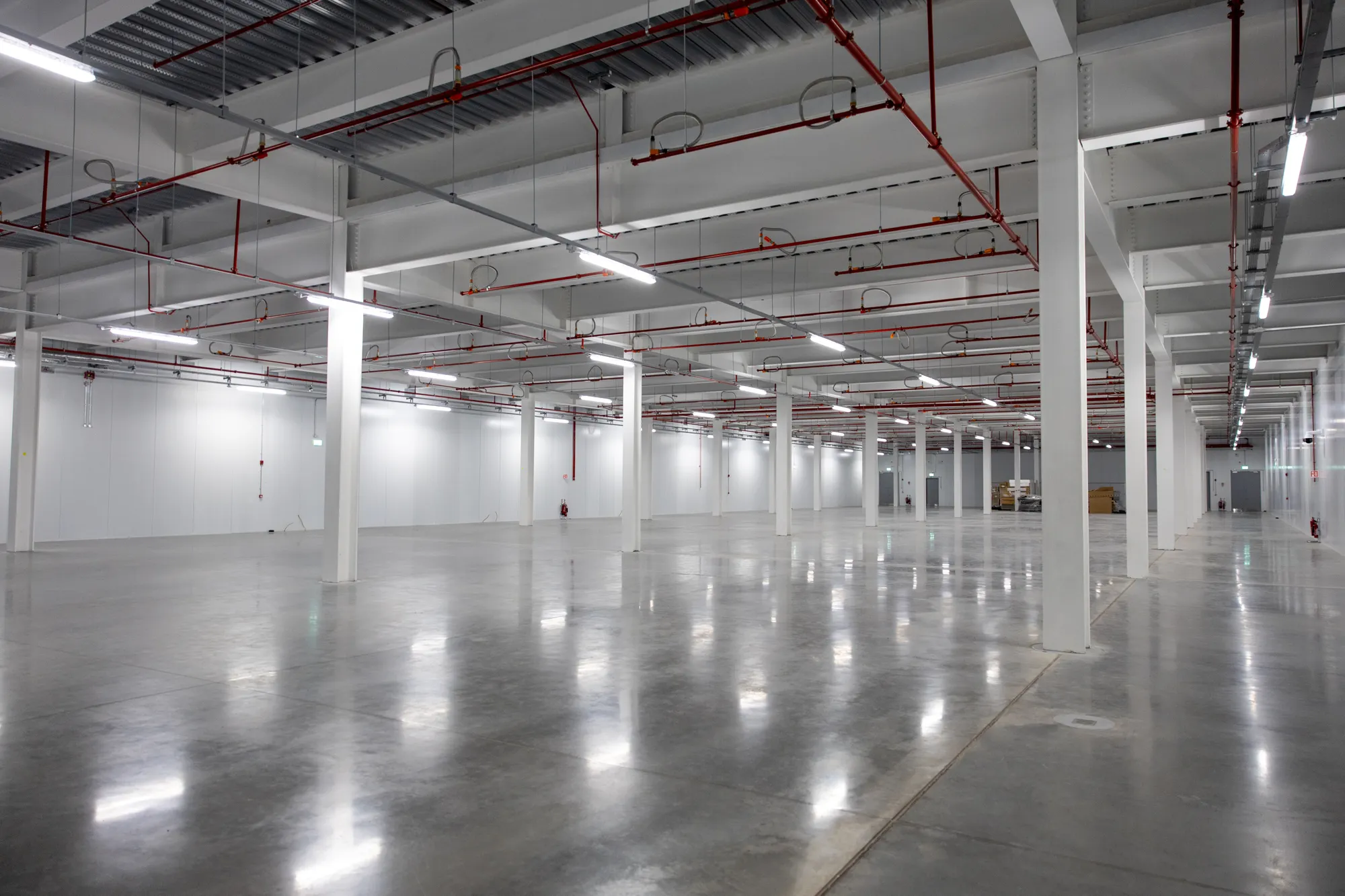
Ireland was the canary in the coal mine. The country was an early leader in the datacentre building frenzy, driven by favourable tax rates for tech companies, subsea data cables to the US and the UK and a skilled workforce. Datacentres sprouted like mushrooms around Dublin – until one day they didn’t.
In 2021, regulators imposed an effective moratorium on new datacentre builds around Dublin because of the massive demand for power and worries about the stability of the grid.
Since then locations including Frankfurt, London, Amsterdam and Paris (aka “FLAP”) have faced similar constraints, with multi-year waits for a grid connection. In Asia, Singapore, Malaysia and Tokyo and Osaka in Japan developers face similar grid congestion.
According to Maurice Mortell, chair of trade body Digital Infrastructure Ireland, the Irish moratorium has delayed €7.8 billion of pipeline investment with some diverted to other European markets.
A data centre can be built in a couple of years, but few operators are willing to wait a decade for a grid connection.
The Dublin moratorium ends
But the Irish canary is stirring.
At the end of last year, the authorities unveiled a plan. Datacentres and other “large energy users” would once again be able to connect to the grid, but only under strict conditions. These include generating their own power while also contributing to grid stability. In other words, they must act as energy infrastructure participants, not just passive consumers.
Under the new rules, datacentres are required to provide on‑site or nearby dispatchable power (i.e. available to the grid on demand) to match the site’s maximum capacity.
Moreover, at least 80% of annual electricity demand must be matched by new renewable generation, with developers allowed a six-year “glide path” for renewables to be deployed. In addition, operators are obliged to submit annual emissions figures.
This arrangement specifically favours microgrids.
What is a microgrid?
Microgrids are power generation hubs that can run independently of the main grid (“island mode”), while also connecting to it to import or export electricity and provide grid stability.
In the US, where microgrids have been developed at scale since the early 2020s, they now deliver around 10GW of total capacity, but microgrids are new to Europe.
This year Pure Data Centres (Pure DC) and standby power specialist AVK are bringing online what they describe as the first European datacentre that runs on its own local microgrid.
The initiative, which has been under development for several years, was prompted by Pure DC’s Dublin datacentre being granted planning permission but refused a grid connection.
The microgrid, under construction after a successful 10MW pilot, consists of three connected energy centres and is located within Pure DC’s Dublin campus. It is designed to power datacentre operations until a connection becomes available. After that it will be integrated with the grid.
At 110MW, the facility is equivalent to the power consumption of roughly 100,000 homes, electricity that would have come from the grid. If rolled out more widely, microgrids could help to mitigate the sort of electricity price rises that are causing such pushback against datacentres, notably in the US.
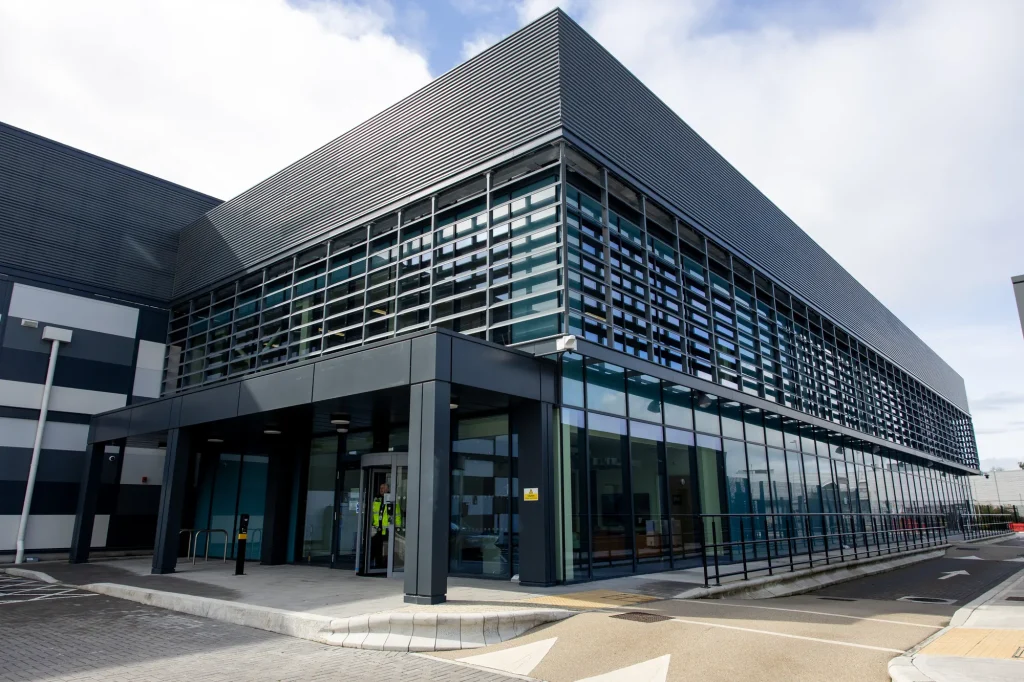
Pure DC’s Dublin campus
Currently, the site in the suburb of Ballycoolin delivers 54MW of compute. Pure DC plans to triple that over time, and there is capacity to add another 90MW, subject to planning permission. The facility uses closed loop cooling which, once filled, consumes virtually no water in operation.
“We publicly declare our water usage efficiency, which has to be below 0.4 litres per kilowatt-hour,” CTO Ian Whitfield told Computing. “We do use some water for welfare and other bits and pieces in the datacentre, but it is very, very modest.”

The datacentre, which mostly supports cloud workloads, offers an SLA of five-nines availability (a maximum of 300 seconds per year downtime). Components and connections are duplicated to allow for maintenance and failures without causing outages.
The microgrid
The core components of a microgrid are generators, standby generators, grid connectors, battery storage for stability, and a control system to stitch them all together. The optimal choice of these components is location-dependent, depending on available space, weather conditions and regulations.
Microgrids have been around for a while, for powering large manufacturing plant and in gas peaking stations, but challenges unique to the data centre environment include the need for extreme levels of uptime and the ability to scale easily.
While its electricity grid may be under strain, Dublin has “very robust” gas infrastructure, Whitfield explained, so that was the obvious choice for the generating engines. However, these are chosen with future emissions reductions in mind and are dual-fuel, able to switch rapidly to hydrotreated vegetable oil (HVO) which is derived from food and agricultural waste and stored on-site. Pure DC is also trialling biomethane, with plans to completely replace natural gas in the future, and hydrogen, which could supplement natural gas up to 20% by volume.
Space constraints rule out on-site wind and solar (which anyway can’t deliver dispatchable power alone), but these are steadily being added to Ireland’s grid, so will be part of the mix once the system is connected.
The microgrid is designed to be flexible and modular, AVK COO Paul Hood told Computing, with the ability to add more kit as it’s needed – but right-sizing is vital.
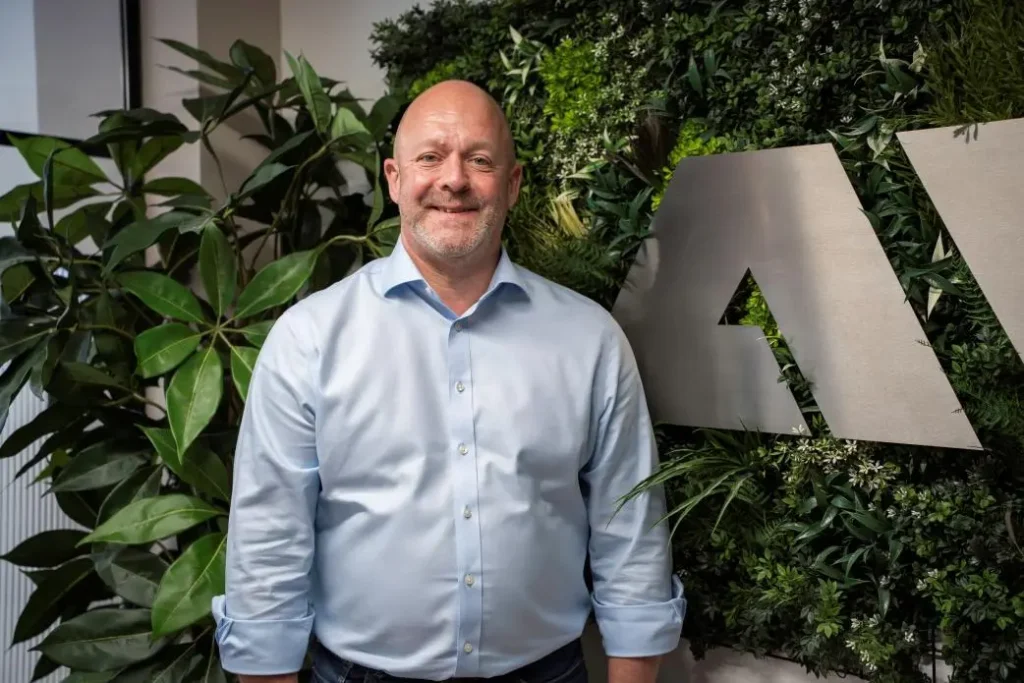
“It’s very important that you select the products at the right size. Most electrical electromechanical kit likes to be on and be working hard, that way it’s more efficient and there are less losses.”
AVK is working with Rolls-Royce, AVCO and Landmark Power Holdings (LMPH) to deliver “power pods” from a new site in Haydock, Lancashire. The plan is to provides technology-agnostic low-carbon power supplies for datacentres, with a common architecture but with a choice of generation, including fuel cells, gas turbines and dual-fuel engines.
Microgrids used to be seen as a bridging solution while waiting for a connection, but AVK CEO Ben Pritchard remarked that they are coming to be viewed as an integral component of a datacentre, designed to last for the lifetime of the facility.
“It’s a moment where the market starts to think about power differently,” he said.
Instead of being seen as “energy hungry beasts”, data centres offering dispatchable power could enhance grid stability as more renewables come online. This is no doubt front of mind for many in an industry that is seeing rising resistance around the world and desperately wants to be viewed as the good guy providing an essential service to the world.
Towards net zero
On emissions, the plan is to phase in renewables, with the Dublin site becoming operational net zero by 2040. The structure includes heat recovery for potential combined heat and power (CHP) export for community use and rainwater harvesting.
But it’s an inescapable fact that datacentres use a lot of power, particularly in the age of AI.
Within the industry there is much talk of carbon capture and storage (CCS) as an emissions panacea. CCS is often championed by politicians keen to defer difficult decisions and by energy companies wedded to the status quo. That does not mean carbon capture technologies do not exist – AVK partner AVCO efficiently extracts CO2 from exhaust and sells it to drinks manufacturers, and permanent storage is possible in depleted oil wells and similar, but viability at scale depends heavily on local geography.
Whitfield said that while CCS tech is improving, it is not currently viable in most cases at a datacentre scale, which is why Pure DC is focusing on renewables like certified biomethane and HVO. While they emit CO2, they do not add to the overall problem.
Neither is that other supposed panacea, small modular nuclear reactors (SMRs), on the roadmap.
“Those projects have been in gestation for many years, and will still take a few years to build. What are you going to do with the fuel rods afterwards, and what about the full lifecycle, ownership model and long-term liabilities?
“The way we thought about it was to control what we can control, which is the fuel medium. So if we can neutralise the fuel medium by having gas generated from waste, then it’s a sort of a neutral circularity.”